
The short answer
In Toronto the public sidewalk is City property, and the City inspects and repairs it; you report a cracked, heaved or sunken panel through a 311 service request and you do not hire a contractor for it. The walkway from the sidewalk to your door, your steps and your driveway inside the property line are yours. The exception that costs owners money is damage you or your project caused: construction traffic under a building permit is covered by the Municipal Road Damage Deposit the City holds, and a utility cut is restored by the utility that made it.
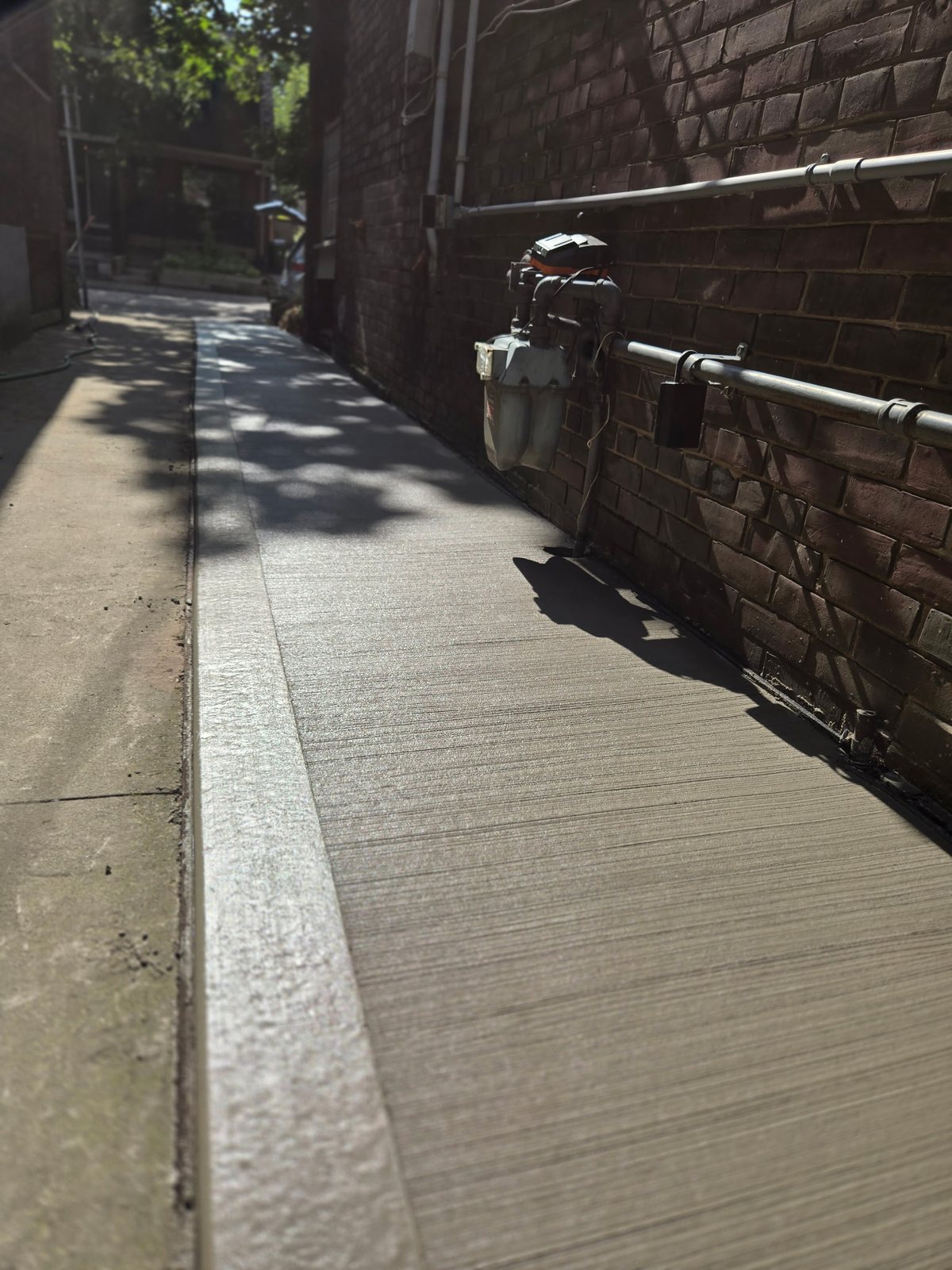
Who owns what in front of a Toronto house
Stand at your front door and look toward the street. The walkway, the steps and the porch are on your lot. Somewhere short of the sidewalk, usually a metre or two behind it, is the property line. Everything from there to the far side of the road, the grass boulevard, the sidewalk, the curb and the roadway, is the public road allowance, owned and maintained by the City of Toronto. Your driveway crosses that strip by permission, and the City’s rules apply to it.
The City says so plainly on its own pages: it inspects and repairs public sidewalks, and residents report problems through 311. The service request covers minor sidewalk damage, maintenance of accessibility ramps and tactile pavers, water ponding on a sidewalk, damaged curbs and curb height adjustments. A request for a new sidewalk where there is none goes to a separate City email address rather than 311.
How to report it, and what happens next
Submit a 311 service request online, through the app or by phone, with the address and a description of the defect. A photograph helps. The City inspects, assigns a priority by severity and schedules the repair; a lifted panel that is a clear trip hazard is treated differently from a hairline crack, and timelines vary with the backlog. Keep the request number. If someone falls on a reported hazard before it is fixed, the record that it was reported matters.
What you should not do is fix a public sidewalk yourself or pay a contractor to. Work on City property needs the City’s permit, a sidewalk panel is built to the City’s own specification and inspected to it, and a well-meaning patch is removed at the owner’s expense. We get asked to grind lips on public sidewalks regularly, and the answer is the same every time: report it, and we will deal with the private side.
When the cost is yours after all
Three situations put a public sidewalk repair on the property owner’s account. The first is construction. If you take out a building permit, the City holds a Municipal Road Damage Deposit against damage to the sidewalk, curb and boulevard while your project runs. Trucks riding the curb, bins on the boulevard and excavators tracking across the panels all leave marks, and when you ask for the deposit back the City inspects and deducts the cost of what it has to repair. Photographing the frontage before you start, and asking the City for a pre-inspection within its ten-working-day window if it is already damaged, is how you avoid paying for cracks that were there before you.
The second is a utility cut. When a water service, sewer, gas or hydro connection is dug up through the sidewalk, the cut is made under a City Utility Cut Permit and the utility that made it restores the City’s infrastructure to the City’s standard, with the City inspecting. That one is not yours either, but if the temporary patch sinks and nobody comes back, a 311 request is what moves it.
The third is private concrete that looks public. The walkway between the sidewalk and your steps, the apron of your driveway and any path you poured on your own lot are yours, including the trip hazards on them, and so is the liability when a visitor or a courier falls on them. That is the concrete we repair, grind, lift or replace, and document so the record shows it was dealt with.
The grey strip: your walkway across the boulevard
A walkway from the public sidewalk to the curb, or a driveway apron between the sidewalk and the road, sits on City land but exists to serve your property. The City treats it as yours to maintain in practice, and any rebuilding or widening of it needs a Landscape Construction Permit from Transportation Services, with drawings, a security and a licensed contractor. If you are unsure which category a piece of concrete falls into, the City’s mapping or a call to 311 settles it for your address, and we will tell you at an assessment which parts we can touch and which parts need the City first.
Key takeaways
- The public sidewalk is the City’s to repair; report it through 311 and keep the request number.
- Do not patch or grind a public sidewalk yourself; it needs the City’s permit and specification.
- Your walkway, steps, porch and driveway inside the property line are yours, including the trip hazards on them.
- A building permit project puts sidewalk damage on your deposit, so photograph the frontage before you start.
- Utility cuts are restored by the utility under the City’s permit; a sunken patch is a 311 request, not a contractor call.
Sources
The official and published sources this post relies on. Rules, fees and market prices change, so check the source before you plan around a figure.
- City of Toronto: Sidewalks & Roads, report a repair, What the City repairs on public sidewalks and curbs, and how to submit a 311 service request.
- City of Toronto: Sidewalks in Toronto, How sidewalk repairs and requests for new sidewalks are handled.
- City of Toronto: Municipal Road Damage Deposit Permit, The deposit held against damage to the sidewalk, curb and boulevard during a building permit project, and how it is refunded.
- City of Toronto: Utility Cut Permit Application, Who may cut a City road or sidewalk, and who restores it.
- 311 Toronto, Service requests for sidewalk, curb and utility cut problems on City property.
Frequently asked
Can I be fined for a cracked City sidewalk in front of my house?
Not for its condition; the City maintains it. The by-laws that do apply to owners at the frontage are about clearing snow and ice where that duty applies, keeping the boulevard tidy, and not damaging or building on City property without a permit.
The sidewalk was broken by my neighbour’s builder. Who pays?
The City looks to whoever holds the building permit and the road damage deposit at that address, which is why pre-construction photographs matter to everyone on the street. Report the damage through 311 and tell the City which project caused it.
Can your company repair the public sidewalk if I pay for it?
Not without the City’s permit, and in the ordinary case the City repairs its own sidewalks at no charge to you, so paying for it would be a mistake. Where an owner is required to restore a sidewalk after their own project, we do that work under the owner’s permit to the City’s specification.
What about the sidewalk in Scarborough, North York or East York?
Same answer. Those are all within the City of Toronto, so the same 311 process and the same permits apply. Outside Toronto, in Pickering, Ajax or Whitby, the local municipality owns the sidewalk and has its own reporting route.