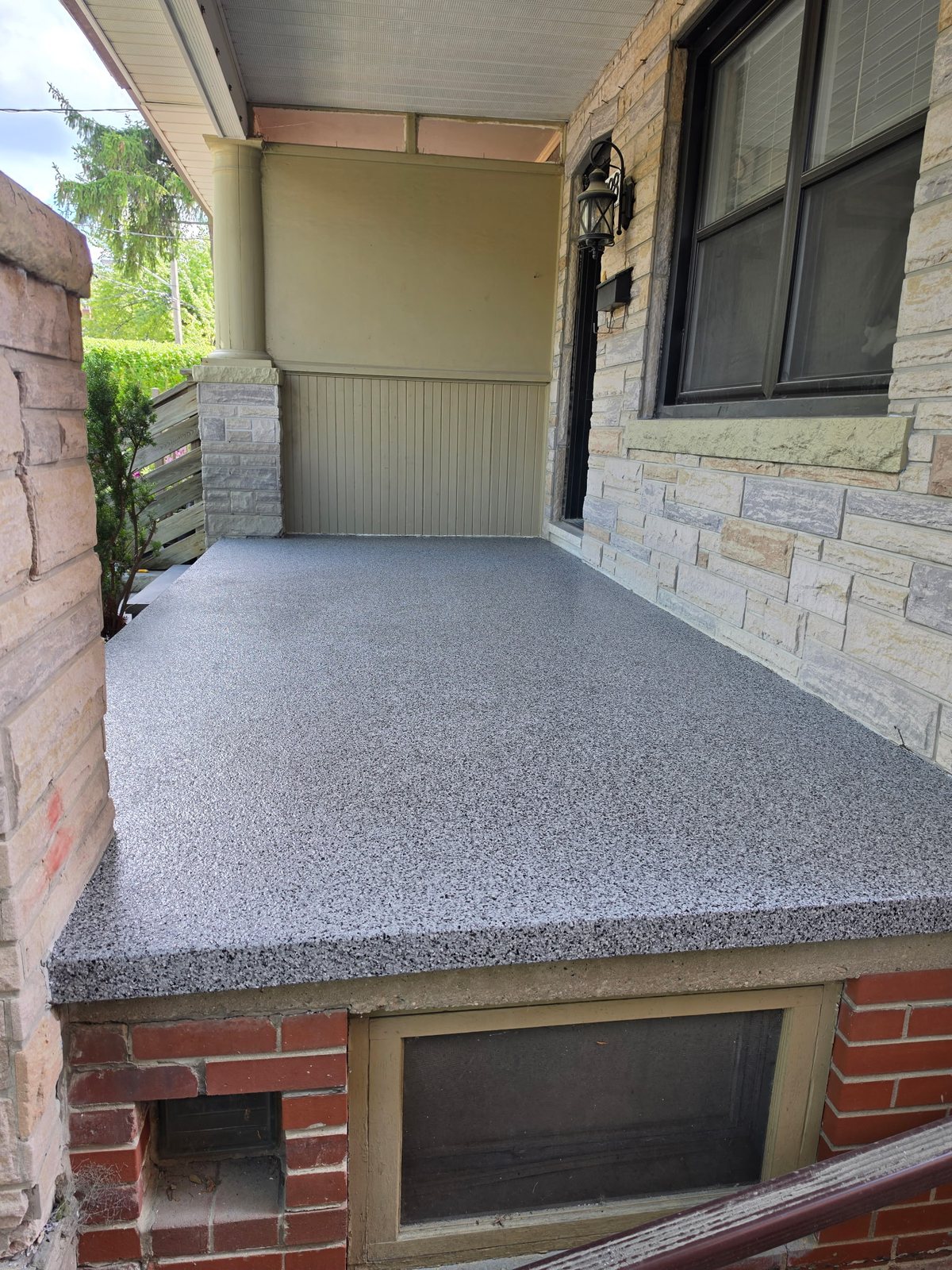
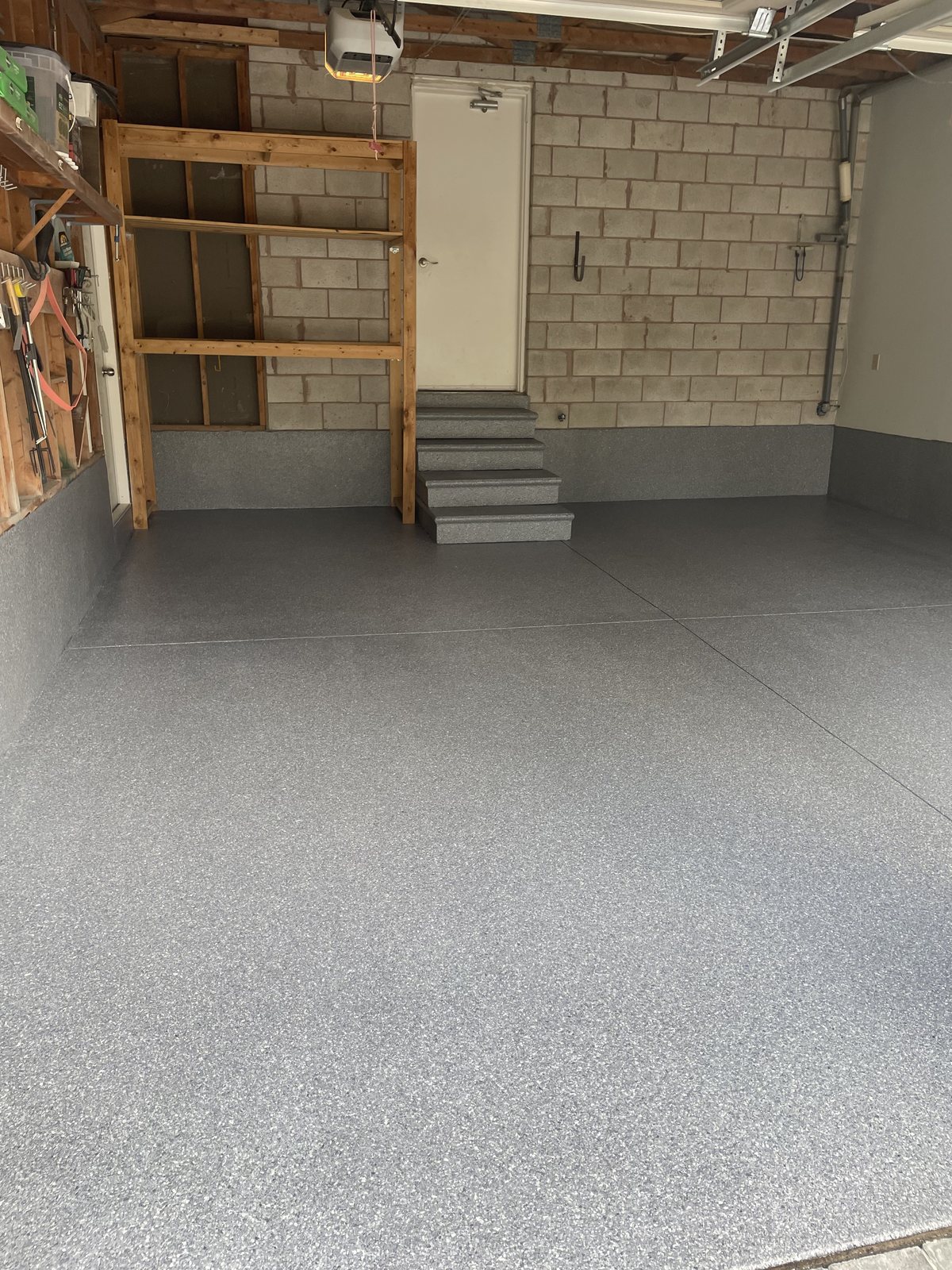
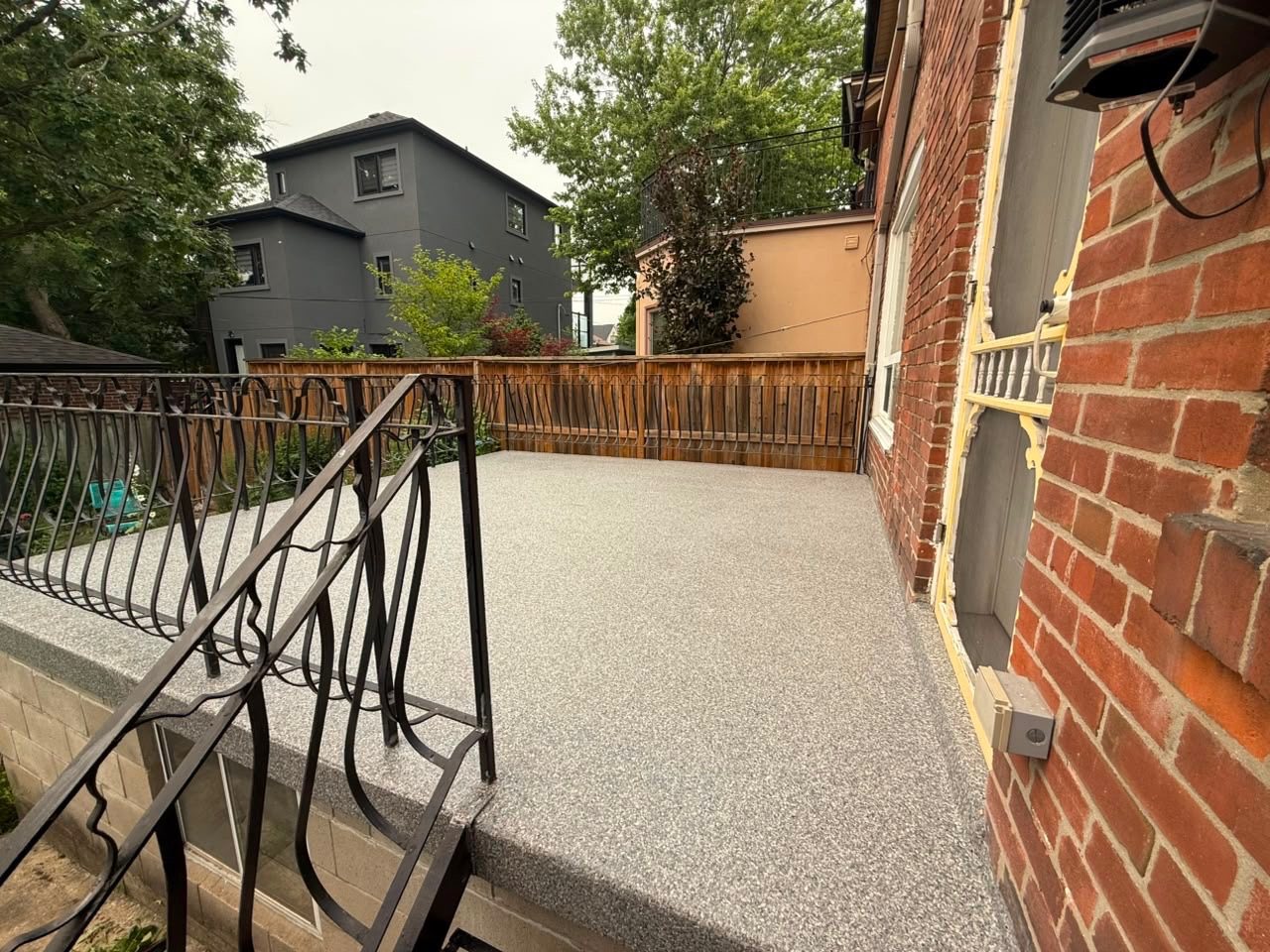
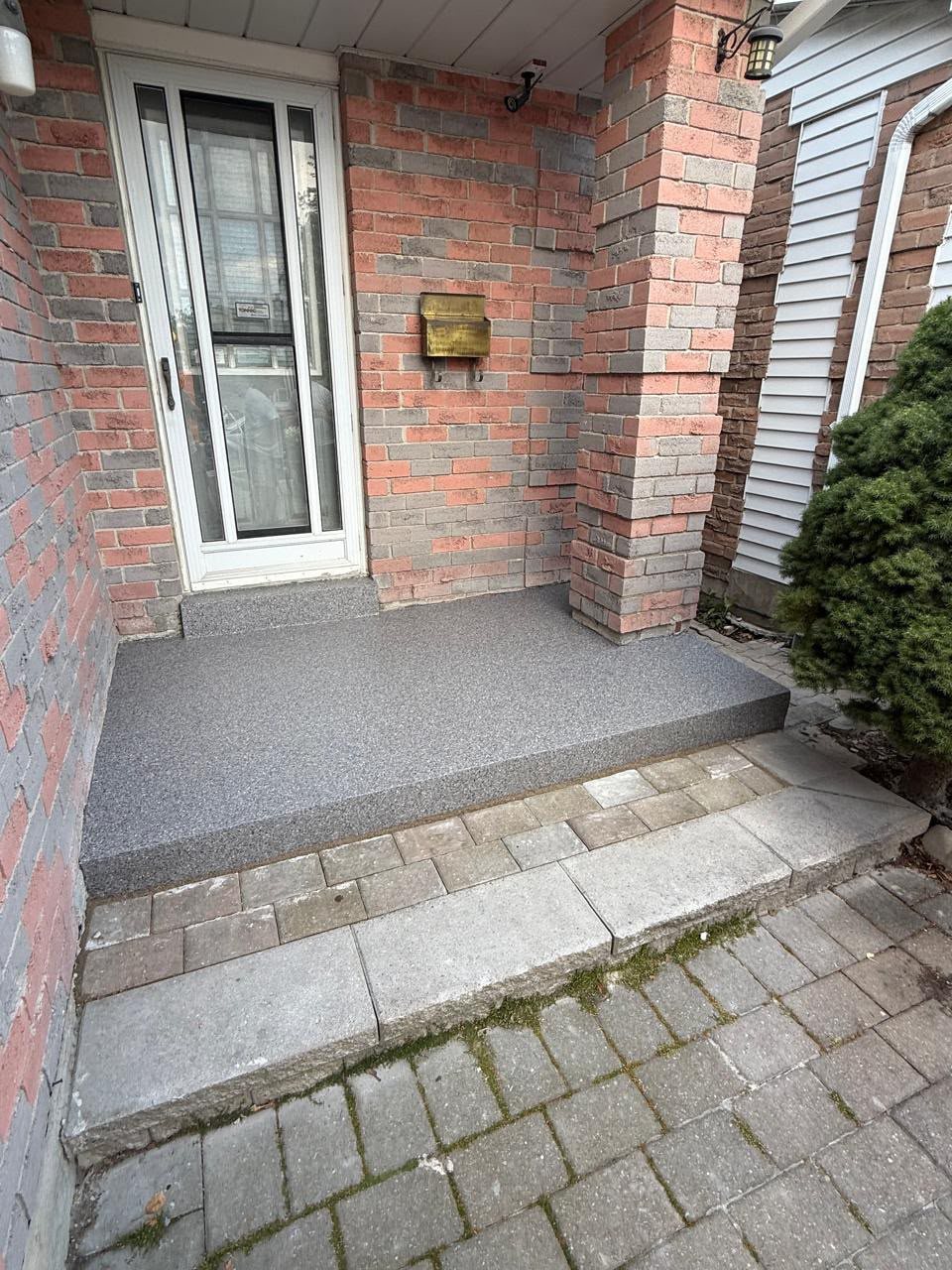
The concrete underneath has to be sound
We sound the slab for hollow and delaminated areas first. Anything loose is repaired or removed before a drop of primer goes down, because a coating bonded to a layer that is already letting go fails with that layer.
Old failing finishes come off, they do not get coated over
Jewel Stone, an old overlay, a previous coating that is lifting: the new system bonds to whatever it touches. If that is a finish already losing its grip, you have simply bought a thicker thing to peel. Removal is work and it costs money, and it is the difference between a repair and a redo.
Moisture from below gets checked, not assumed
Vapour driving up through a slab is the most disputed cause of coating failure in this industry, it is usually excluded from warranties, and the manufacturer’s own data calls for a moisture-vapour test on slabs on grade. Your porch, steps and garage floor are slabs on grade. We test rather than hope.
New concrete has to be old enough
The manufacturer requires new concrete to cure for about thirty days before this system goes on. If your slab was poured last week, the right answer is that we book you for next month.
The surface is diamond-ground before coating
Mechanical grinding, not just cleaning and not an acid etch. Installers who have undone each other’s failures are consistent on this: etching is unreliable and grinding is not. An inadequate profile is one of the three causes that come up again and again in coating disputes, alongside moisture and applicator error, and it is invisible once the job looks finished.
Joints get treated as joints
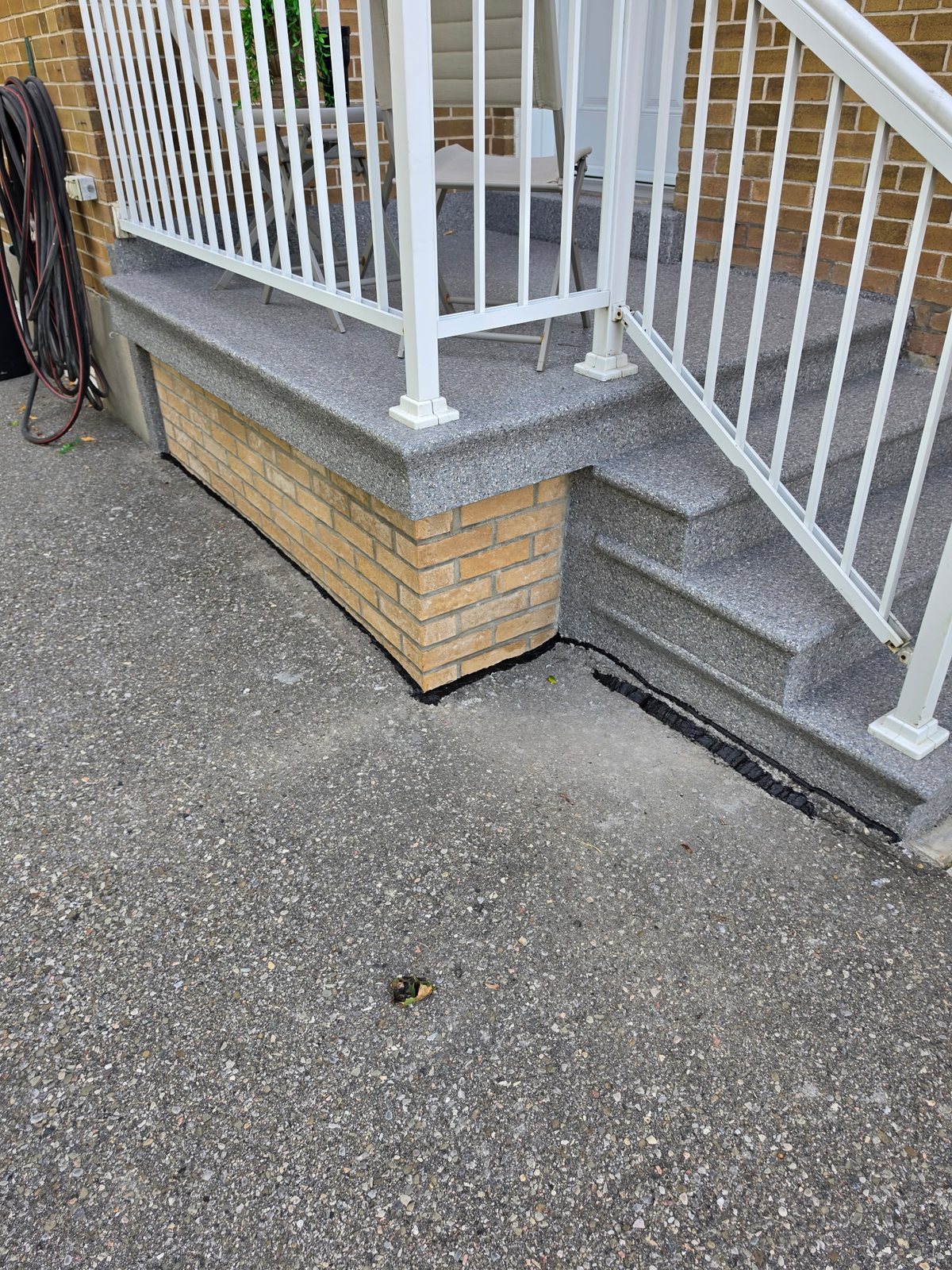
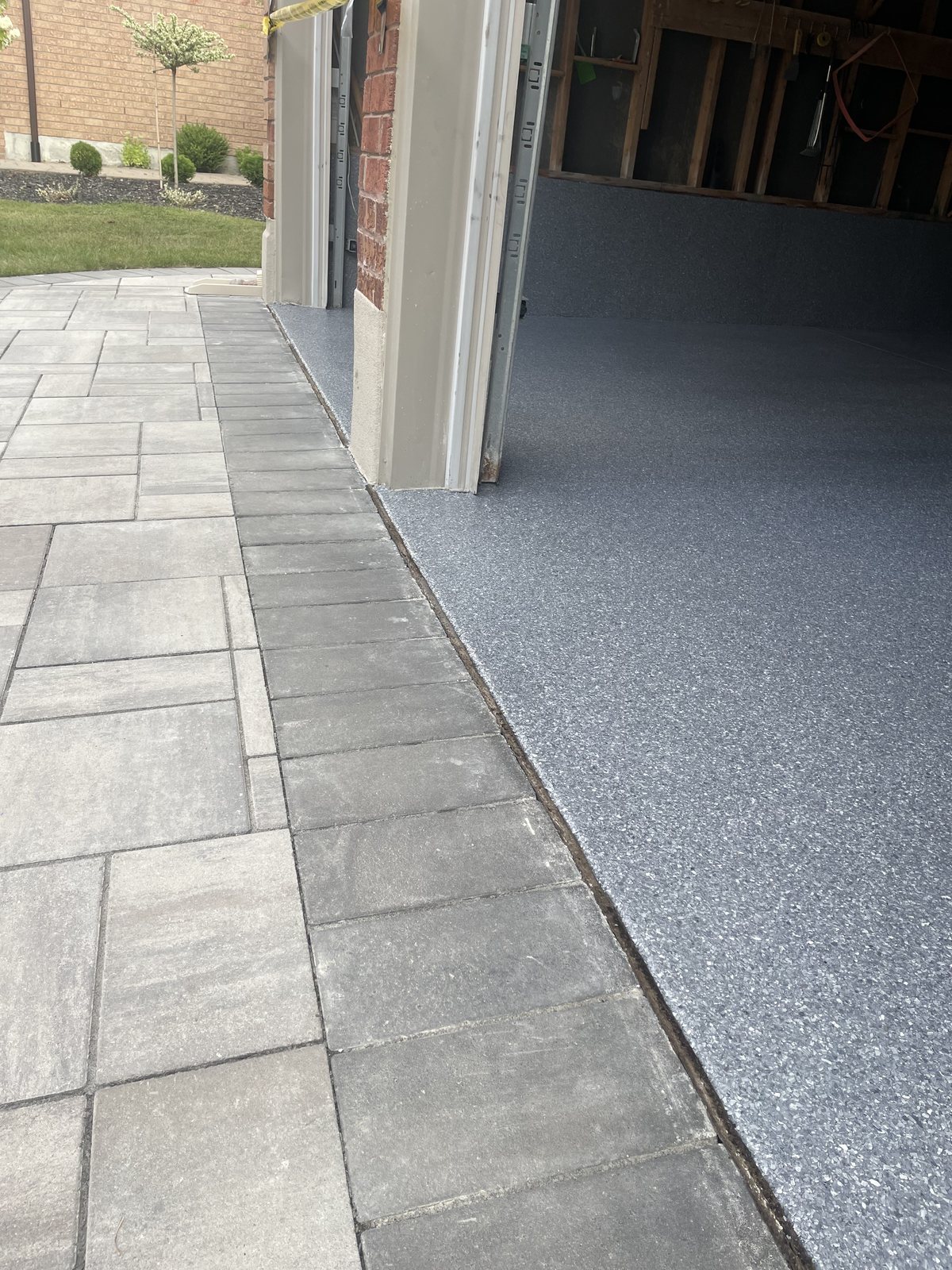
A control joint moves. A coating stretched across one eventually splits along it or telegraphs a line through the finish, so joints are filled and tooled to keep working rather than simply buried. Ask anyone quoting your job what they intend to do at the joints; it is a fast way to tell who has done this before.
The weather has to co-operate
The substrate has to sit above the dew point during installation, and coatings generally want temperatures around 10 degrees and rising. In a Toronto autumn that is a real scheduling constraint, not a formality: exterior work here runs out of road somewhere around late October. Installing into condensation you cannot see is how a bond fails on day one, so when the week is wrong the installation is moved to one that suits.