
The short answer
Toronto concrete cracks because water gets into it and freezes, expanding about 9% each cycle, and because slabs shrink, settle and get attacked by road salt. Hairline shrinkage cracks are cosmetic; wide, growing or offset cracks mean movement and need assessment. The fix is matched to the cause: filling for stable cracks, structural repair for moving ones, and sealing to slow the water down.
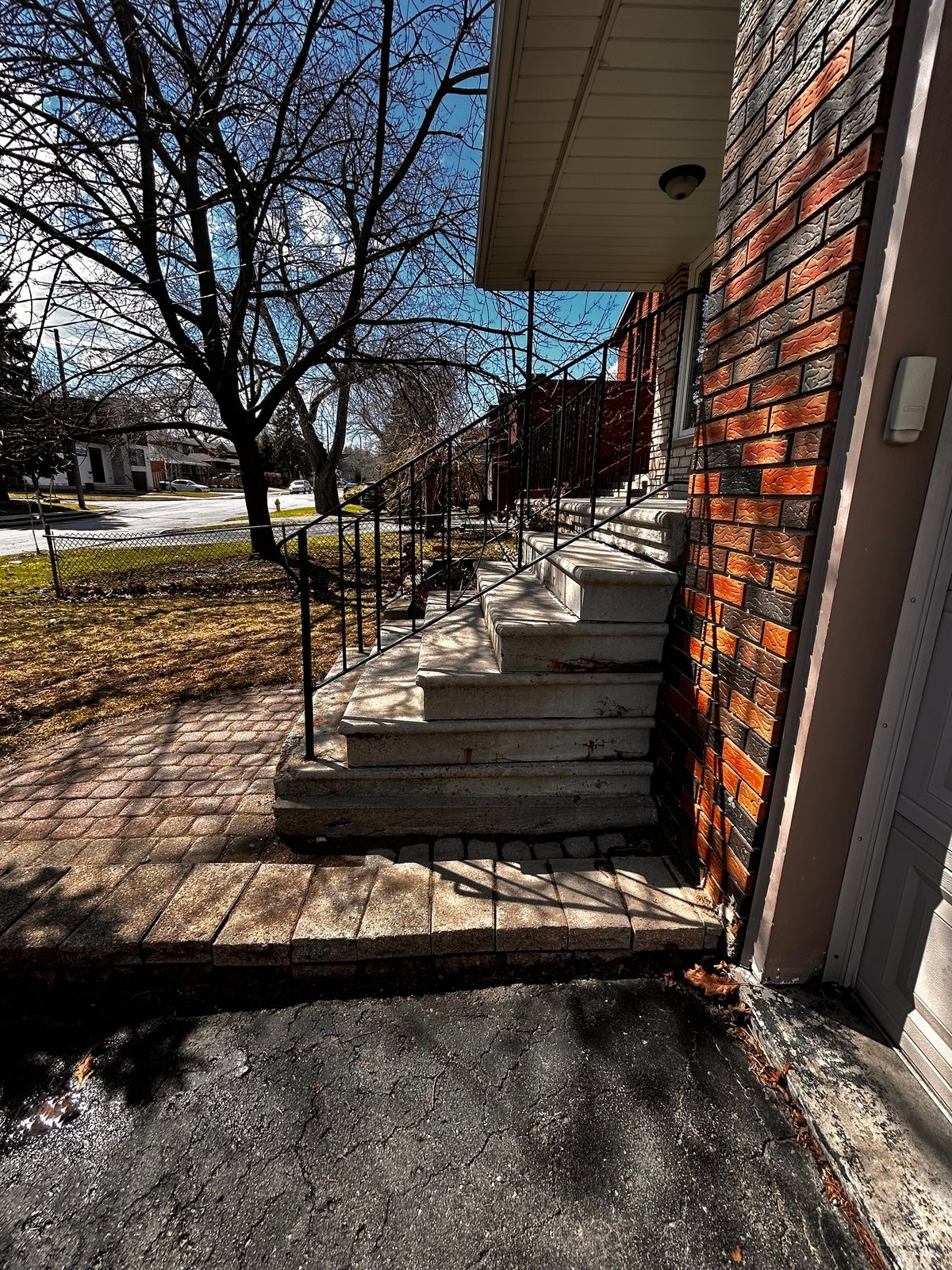
Freeze-thaw: water’s expansion trick
Concrete is porous, so it absorbs water. When that water freezes it expands by roughly nine percent, pushing against the concrete from the inside. Thaw, refreeze, repeat, Toronto sees dozens of these cycles a winter, and the surface eventually loses the fight. That is what produces scaling, flaking and pop-outs.
Newer concrete resists this better when it was air-entrained (tiny air bubbles give freezing water somewhere to go) and properly cured. Older slabs poured before those practices were common are far more vulnerable, which is why the city’s aging concrete fails first.
De-icing salt: chemistry that attacks steel
Road and sidewalk salt lowers the freezing point of water, which drives more freeze-thaw cycling through the concrete. Worse, chlorides from salt migrate down to the reinforcing steel and corrode it. Rusting steel expands and blows the concrete off from the inside, the spalls you see with rusty rebar showing are chloride corrosion, not a surface problem.
Which cracks matter
Not every crack is a problem. Fine shrinkage cracks from curing are cosmetic. Cracks that open and close with the seasons are “working” cracks and need a flexible repair, not a rigid patch. Full-depth cracks, cracks tracing rusty steel, and cracks with settlement on one side are the ones worth acting on, they signal movement, water intrusion or corrosion underneath.
The practical test is not the crack’s width but its behaviour and what is around it. When in doubt, an assessment tells you which category yours is in.
Key takeaways
- Freeze-thaw expansion, de-icing salt and water are the three forces behind winter cracking.
- Chloride from salt corrodes rebar, which spalls concrete from the inside.
- Cosmetic shrinkage cracks differ from working, full-depth or rebar-related cracks.
- Sealing and drainage control are the cheapest defences.
Frequently asked
Can I stop my concrete from cracking?
You cannot change the weather, but sealing on a schedule, keeping water and salt off the surface, and fixing drainage dramatically slow the damage.
Are hairline cracks a problem?
Usually not on their own, but they let water in, so sealing them prevents freeze-thaw from widening them over time.
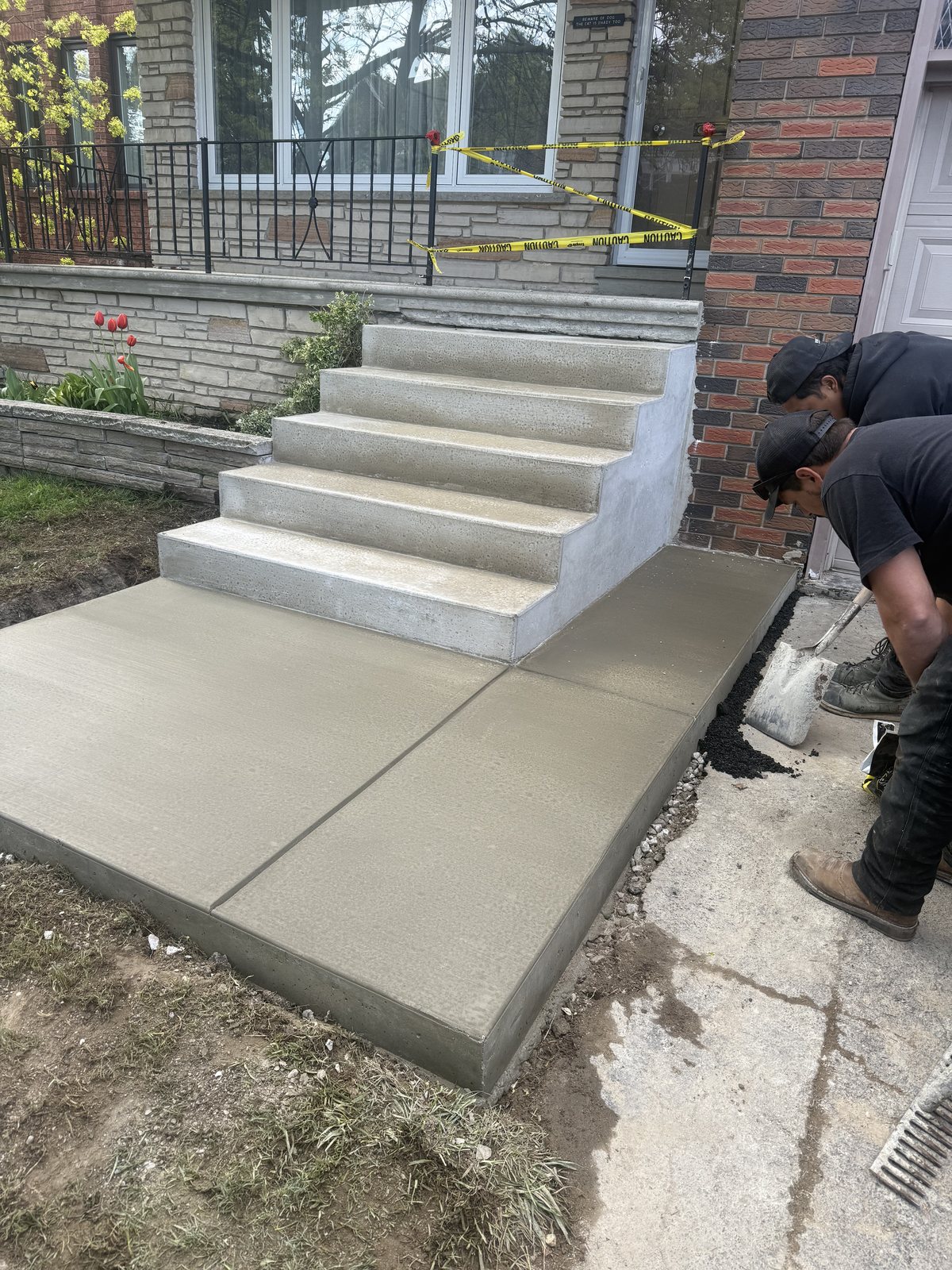 See it doneThis exact stair, rebuilt: the full job recordView →