
The short answer
No, annual sealing is oversell for most concrete driveways. A quality penetrating sealer on Ontario concrete typically protects for two to five seasons depending on product, traffic and exposure; film-forming decorative sealers need renewing more often. What matters is the cycle, not the calendar: test whether water still beads and darkens the surface slowly, reseal when it stops, and always seal in dry fall weather before the salt arrives. New concrete should cure roughly a month before its first sealing.
What a sealer is actually doing
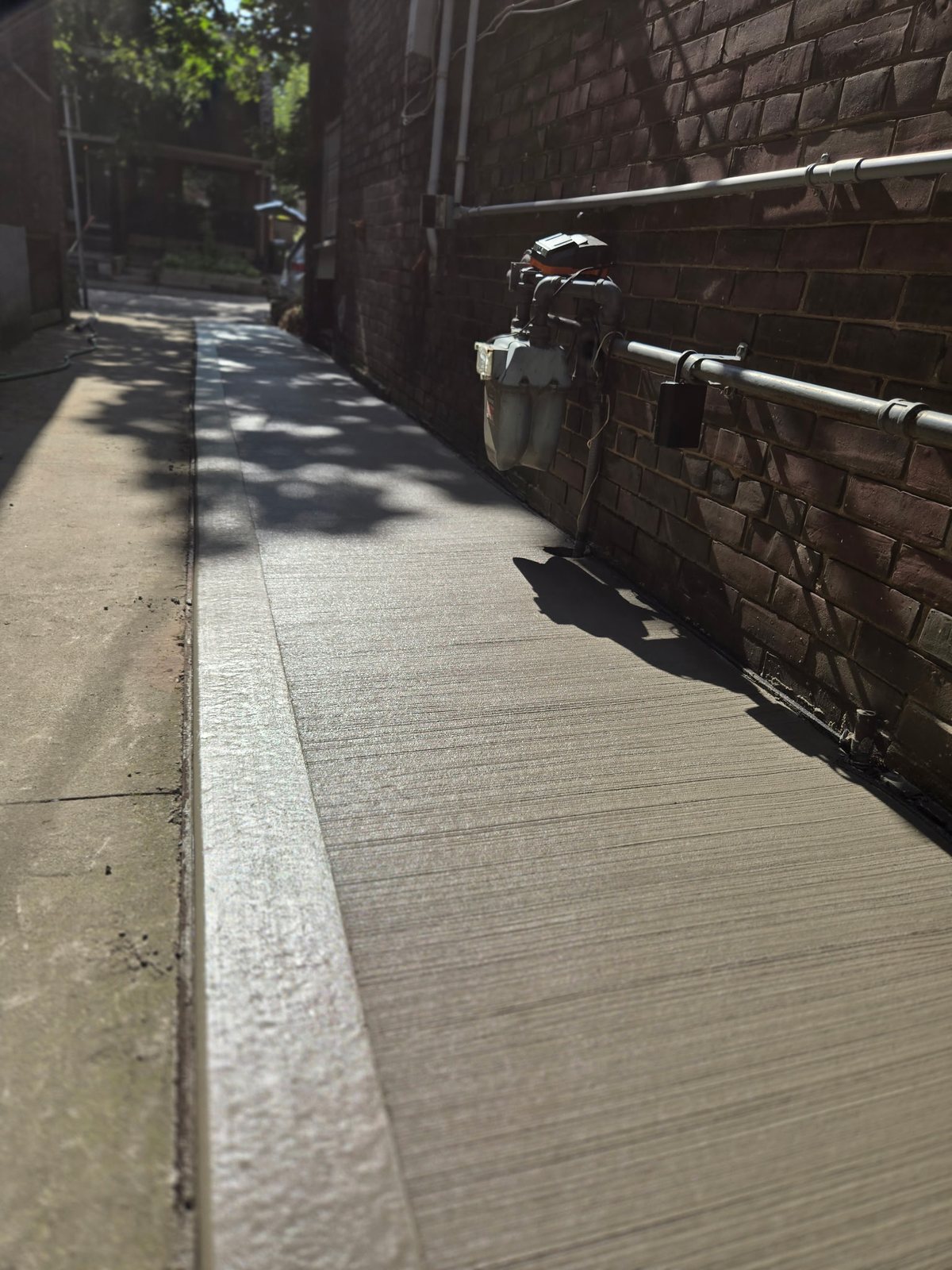
Bare concrete absorbs water like a stiff sponge, and in Ontario that water freezes inside it dozens of times a winter while road salt keeps the surface wet and feeds chlorides toward the steel. A penetrating sealer soaks into the surface and makes it water-repellent without changing its look or grip. It is the single cheapest thing you can do for exposed concrete, and the most commonly skipped.
It is not a force field. Sealers slow water and salt down; they do not make bad drainage, aggressive salting or failing concrete irrelevant. Think of sealing as the maintenance behaviour that makes everything else last longer.
The honest schedule
Quality penetrating sealers (silane/siloxane types) typically protect a residential driveway for two to five seasons. Where a driveway lands in that range depends on traffic, sun exposure, how much salt it sees, and how porous the concrete was to begin with. Film-forming and decorative sealers, the glossy ones on stamped concrete, wear faster and need more frequent renewal.
Annual sealing is rarely necessary with good products, and with film-formers it can actively cause problems, building up layers that haze and peel. When a company insists your driveway needs sealing every single year, you are hearing their revenue model, not your concrete's needs.
The test costs nothing: pour a cup of water on the driveway. If it beads or darkens the surface slowly, the sealer is working. If it soaks straight in and darkens immediately, you are due.
When and how it should be done
Fall is the right time in Ontario, a dry surface, moderate temperatures, and protection in place before the first salt of the season. Sealing in October is worth more than sealing in May, because it is the winter that does the damage.
New concrete needs to cure before its first sealing, around a month as a rule of thumb, product depending. And a sealer belongs on clean, sound concrete: sealing over open cracks, spalling or grime locks the problems in rather than out, so repairs come first, then the seal.
This cycle is exactly why our Condition Reports carry a re-seal date. Protection that depends on someone remembering it usually lapses; protection on a tracked schedule actually happens.
Key takeaways
- Annual sealing is oversell, quality penetrating sealers last 2–5 seasons
- Film-forming decorative sealers need more frequent renewal than penetrating ones
- The water test tells you when: soaks in fast and darkens = due
- Seal in dry fall weather, before the salt, not after the winter
- New concrete cures about a month before first sealing
- Repair cracks and spalls first; sealer locks conditions in as well as out
Frequently asked
Will sealing make my driveway slippery?
Penetrating sealers leave no film and do not change traction. Film-forming sealers can be slick when wet, which is why they are used with traction additive where they belong at all.
Can I seal my driveway myself?
Yes, with a decent penetrating product, a clean dry surface and a sprayer, a competent homeowner job. Where it goes wrong is product choice, sealing over damage, and damp concrete. If the driveway needs repairs first, do those properly and the sealing is the easy part.
Is sealing worth it on an old driveway?
If the concrete is sound, absolutely, older concrete is often more porous and benefits more. If the driveway is already spalling or cracking apart, sealing alone will not rescue it; repair first, then protect the repair.
What about salt, should I just stop using it?
Use the minimum that keeps the surface safe, and prefer gentler de-icers where you can. A sealed surface plus moderate de-icing is the combination that gets Ontario driveways through winters intact.
 See it doneWhat skipping protection eventually costsView →