
The short answer
Repair when the stair is solid and the damage is on the surface: spalled faces, chipped nosings, worn treads, a failed coating. Replace when the treads are worn hollow, the stair has cracked through or settled away from the house, the risers have lost their shape, or the steel inside is rusting and breaking the concrete apart. Published GTA porch and step repair ranges run $500 to $2,500 before HST; a full demolition and re-pour is priced to the structure, and the only reliable Canadian per-step figures are for precast units.
The test is under the surface, not on it
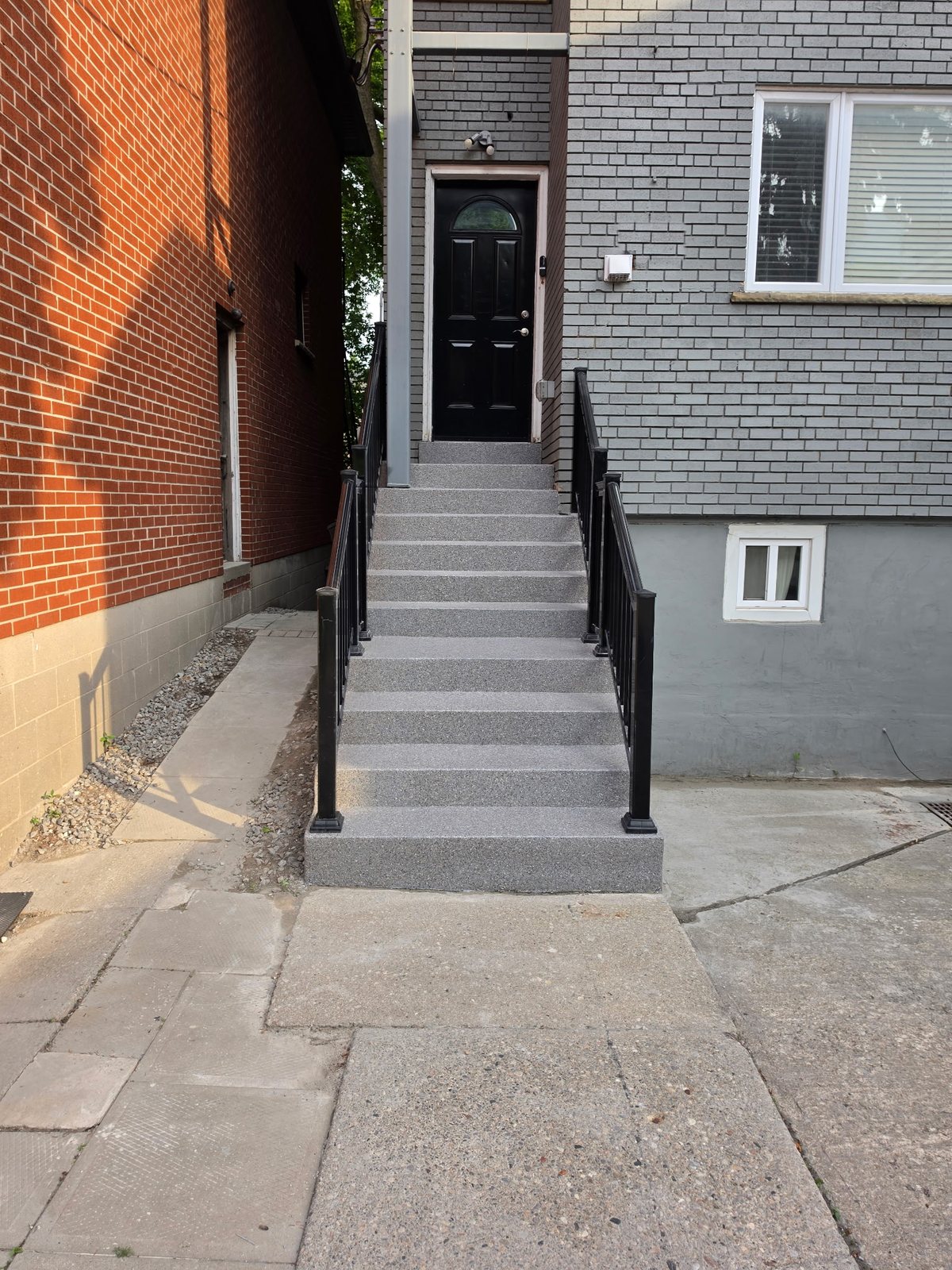
Two stairs can look equally bad from the sidewalk and need opposite work. One has a scaled, flaking surface and broken nosings over a stair that is still one solid piece of concrete; it is rebuilt to profile and resurfaced for a fraction of a rebuild. The other looks similar but the treads have worn hollow, the top step has pulled a finger’s width away from the house and a crack runs through the whole mass. A coating on that stair follows the shape of the failure and comes apart along the same lines within a season or two.
So the assessment starts with a hammer and a level. We sound the treads for hollow spots, check whether the stair is level and still tight to the house, look at the risers for consistency, and look for the rust stains and spalls that mean the reinforcing steel is corroding inside. What that tells us decides which of the two jobs you are buying.
Signs it can be repaired
Spalled faces and chipped nosings with sound concrete behind them. Treads worn or pitted on the surface but still solid when tapped. Paint, a thin coating or a stone-look finish that has let go while the concrete under it has not. Cracks that are tight, not moving and not opening between seasons. A stair that is level, plumb and still tight to the foundation. Those stairs are repaired: the damaged concrete is cut back to sound material, nosings and edges are rebuilt in bonded repair mortar to the original profile, and the whole stair gets a finish that sheds water and holds a boot in winter, usually a flake coating or a broom-textured overlay.
That is most of the stairs we see, and it is the smaller job, so it is the one we quote whenever the concrete allows it.
Signs it has to come out
Treads worn hollow, so the stair has lost its shape rather than its skin. A crack through the full depth of the stair, or a stair that has broken into pieces that move. A stair that has settled, tilted or pulled away from the house, which means the ground under it has failed and will keep failing. Risers of uneven height because the stair has sunk at one end, which is the specific thing people trip on. Rust staining and spalls along the edges that mean the steel inside has corroded and is expanding, breaking the concrete apart from within. Any of those and a repair is a patch on something that is already failing.
Replacement done properly is mostly invisible work. The old stair is broken out and hauled away, the ground under it is excavated and rebuilt with clear stone compacted in lifts, rigid insulation goes in to keep frost from getting under the new stair, a rebar mat is tied and supported up into the section, and the stair and landing are poured as one piece so there is no cold joint to open later. Where the run is simple and straight, precast units set on the same kind of base are the fast route. Either way the base is the job, and the pour is the last hour of it.
The one in between: rebuild the part that failed
Stairs often fail unevenly. The top step and landing take the frost and the salt; the lower steps sit on better ground. Where the lower stair is sound and the top step or landing has gone, the honest scope is to rebuild the failed section properly and resurface the rest in the same finish, so you pay for a replacement only where a replacement is needed. It takes more care to scope than either extreme, which is why it is the option least often offered.
What it costs, in published GTA ranges
The published Ontario range for porch and step repair is $500 to $2,500 before HST. Small jobs carry a floor of $500 to $1,200 because the visit and the setup are the same whether one nosing or six are rebuilt; minor resurfacing and section work runs about $1,000 to $2,500. A full demolition and re-pour is a different project, priced to the structure. We do not publish a per-step figure for poured replacement because every such number we could find is United States data, and converting one and calling it a Toronto price would be guessing; precast units do have an Ontario per-step range, and it is in our porch repair cost guide.
What moves a replacement price is underground: how many risers, whether the landing and walkway are in the scope, how much has to come out and be hauled away, how deep the base has to go, and whether a concrete truck can reach the front of the house or the mix is moved by hand. These are market ranges compiled from published Canadian sources so you can sanity-check any quote, including ours; the full table with every source named is on our cost page.
How to read the quotes you get
The cheapest quote on a failing stair is almost always a coating, and it is the most expensive outcome, because you pay for the coating and then for the rebuild. Ask every bidder what is under the surface and how they know. Ask whether the price covers removal and disposal, the base, insulation and steel, and ask to see photographs of those stages on a previous job, because they disappear the moment the concrete goes in. An itemized quote that separates the rebuild from the finish is the one you can compare.
Key takeaways
- Repair when the stair is solid and the damage is on the surface; replace when it is hollow, cracked through, settled or rusting from inside.
- The assessment starts with a hammer and a level.
- Rebuilding only the failed section and resurfacing the rest is often the middle ground.
- Published GTA porch and step repair runs $500 to $2,500 before HST; replacement is priced to the structure, and the only reliable per-step figures are for precast units.
- Ask for photographs of the base, insulation and steel; they are the part a low bid leaves out.
Sources
The official and published sources this post relies on. Rules, fees and market prices change, so check the source before you plan around a figure.
- The Art of Concrete: Concrete repair cost in Ontario, what to expect, Ontario source, as compiled on our cost page. Prices are quoted before HST.
- HomeStars: Understanding concrete contractor cost in Toronto, Canada source, as compiled on our cost page. Prices are quoted before HST.
Frequently asked
Can I just paint or coat my old steps?
If the stair is sound and the damage is on the surface, yes, after the spalls and nosings are rebuilt and the surface is mechanically prepared. If the stair is hollow, cracked through or moving, a coating follows the failure and lets go within a season or two, and you have paid twice.
How long do repaired concrete steps last?
Repairs done to sound concrete, with bonded repair mortar and a finish that sheds water, last many years and are maintained like any exterior concrete: washed of salt, resealed or recoated on a schedule. The repairs that fail early are the ones done over a stair that was already failing.
Poured concrete or precast for a replacement?
Poured for wide entrances, unusual runs and anywhere the stair meets a landing or a porch, because it is formed to the site and placed in one piece. Precast for a straightforward run to a side or back door, because it is set in a day. Both stand or sink on the base under them.
Does replacing front steps need a permit?
Replacing steps in kind inside your property line is not a City right-of-way matter. A new stair is still built to the Ontario Building Code’s stair geometry and guard requirements, and houses under heritage designation can bring permit requirements for visible changes, which we flag at the assessment.
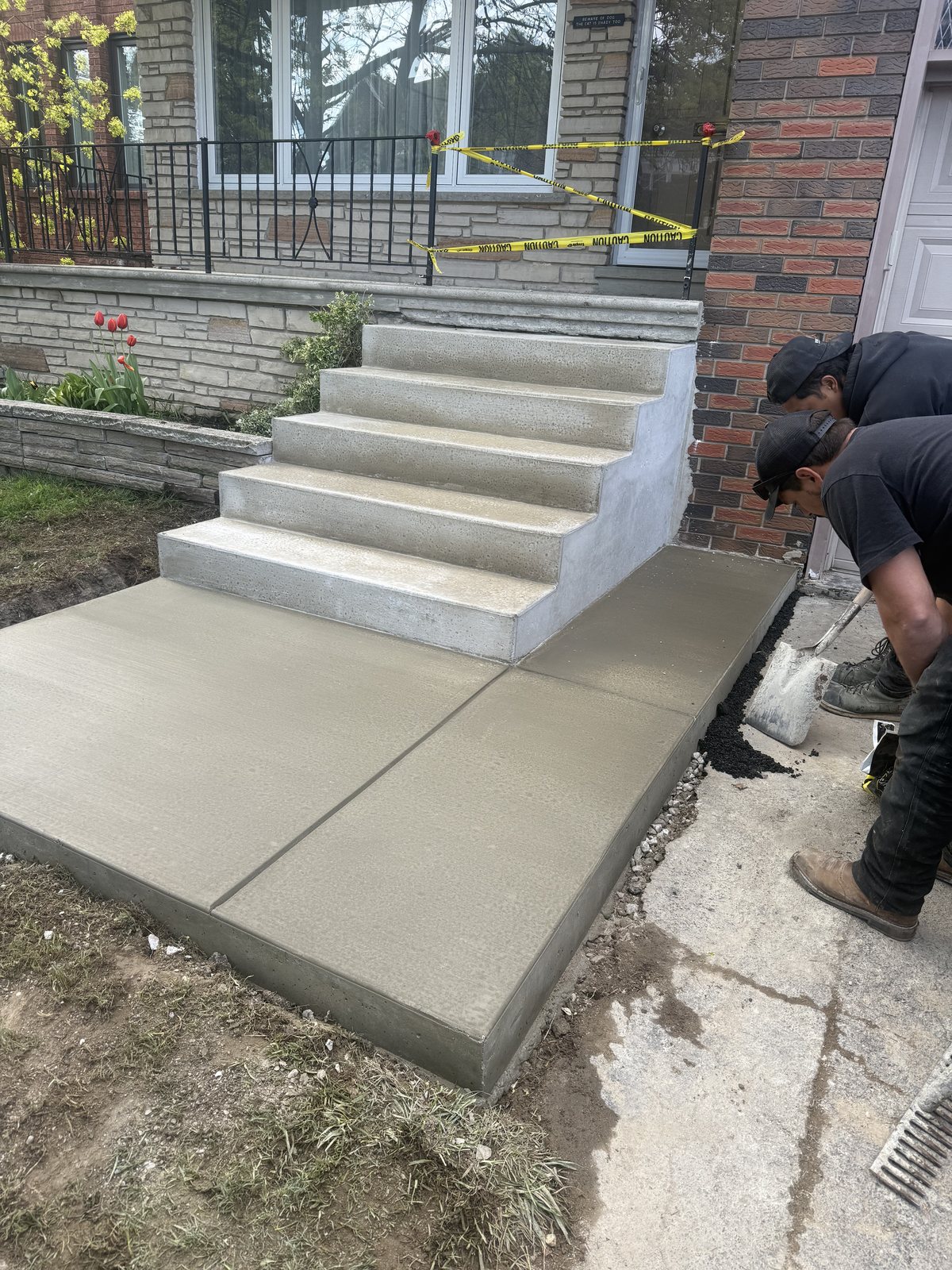 See it doneThe documented step replacement, stage by stageView →