
The short answer
Spalling is concrete breaking away at the surface, flakes, pits and chunks. It has three main causes: freeze-thaw pressure in water-soaked concrete, de-icing salt accelerating that cycle, and rusting reinforcing steel expanding inside the slab. Shallow surface spalling is repairable and mostly cosmetic; spalling with rust stains or exposed steel means the reinforcement is corroding and the damage will accelerate. Overhead spalling in parking structures is a safety issue and needs prompt attention.
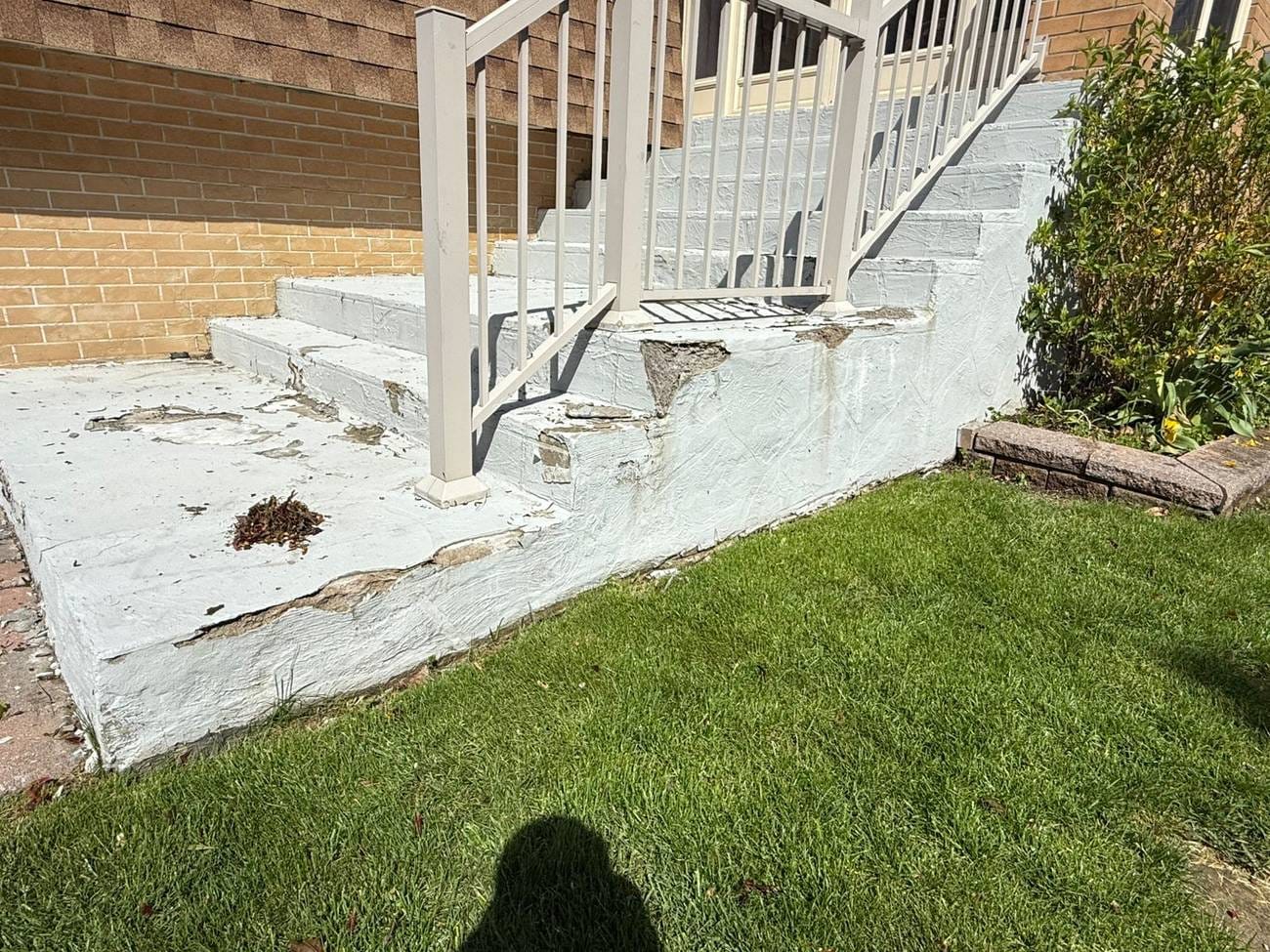
The mechanism, plainly
Concrete is porous, it drinks water. When that water freezes it expands roughly nine percent, and the pressure has nowhere to go except against the concrete around it. Every freeze-thaw cycle pops a little more of the surface loose. Toronto delivers dozens of those cycles a winter, which is why the top layer of an unprotected slab, step or porch gradually flakes, pits and scales away.
De-icing salt makes it worse twice over: it holds moisture in the surface so more freezing happens in the concrete rather than on it, and the chlorides it carries migrate down toward the reinforcing steel.
That third cause is the one with teeth. When chlorides reach steel, the steel rusts, and rust occupies several times the volume of the metal it came from. The expanding corrosion breaks the concrete off from the inside, which is why a slab can shed a fist-sized chunk that looks like it was pushed out rather than worn away. It was.
How to read what you are looking at
Shallow, even flaking or scaling across a surface, with no rust colour, is usually freeze-thaw and salt working on the top layer. It gets worse each winter, but it is a surface problem while it stays one, and it is very repairable.
Rust staining bleeding through, or spalls with a corroded bar visible at the bottom, mean the steel is involved. From that point the damage is being driven from inside and accelerates: exposed steel rusts faster, faster rust pops more concrete, more open concrete exposes more steel. This is the stage where a porch that showed "a bit of flaking" one autumn is missing corners by spring.
Location changes the stakes. Spalling on a garden path is an appearance and trip issue. Spalling on the underside of a parking garage slab or a balcony is falling concrete over people and cars, treat overhead spalling as urgent and get it assessed rather than watched.
How spalling is actually repaired
A real spall repair removes the failed and delaminated concrete back to sound material, not just the loose flakes, but everything that sounds hollow. If steel is exposed, it is cleaned of corrosion and treated before any new material goes in. The area is then rebuilt with a repair mortar matched to the job: polymer-modified for bond, traffic-rated where vehicles run over it.
The step everyone skips is the one that decides the outcome: protection. A repaired surface left bare goes straight back into the same freeze-thaw and salt cycle that failed it. Sealing the surface, or finishing it in a coating system where the use calls for one, is what breaks the loop. On our documented porch and step jobs, the polyaspartic flake system is doing exactly that work.
What it costs to ignore
Spalling is the cheapest it will ever be today. Surface repairs across the GTA typically run in the $5–$10 per square foot range. Once steel is corroding the scope grows to concrete removal, steel treatment and rebuilds, and in structures, to engineered restoration programs. The gap between those numbers is usually two or three ignored winters.
Key takeaways
- Spalling = surface loss from freeze-thaw, salt, or rusting steel inside the concrete
- No rust colour: surface problem, very repairable
- Rust stains or visible bars: the steel is driving it and it accelerates
- Overhead spalling in garages and balconies is a safety issue, assess promptly
- Real repair = remove to sound concrete, treat steel, rebuild, then protect
- Unprotected repairs rejoin the same failure cycle that caused them
Frequently asked
Can I just patch a spalled area myself?
Small cosmetic patches are possible, but most DIY patches fail because loose material was not fully removed, the wrong product was used, or the cause was left in place. If there is any rust colour in the spall, patching over it hides an active problem.
Does spalling mean my concrete needs replacing?
Usually not. Spalling is a surface condition; while the slab underneath is sound, repair and protection are the answer. Replacement enters the conversation when the damage is deep, widespread, or the structure itself has been compromised.
Why did my new-ish concrete spall?
Early spalling usually points at finishing or curing problems, a weak surface layer, or salt used in the first winters. It is worth documenting, because it is the kind of failure a workmanship warranty exists for.
What stops spalling from coming back?
Keep water and salt out of the surface: seal exposed concrete on a cycle, use gentler de-icing, fix drainage that ponds against it, and where the surface takes real abuse, put a proper coating system on it.
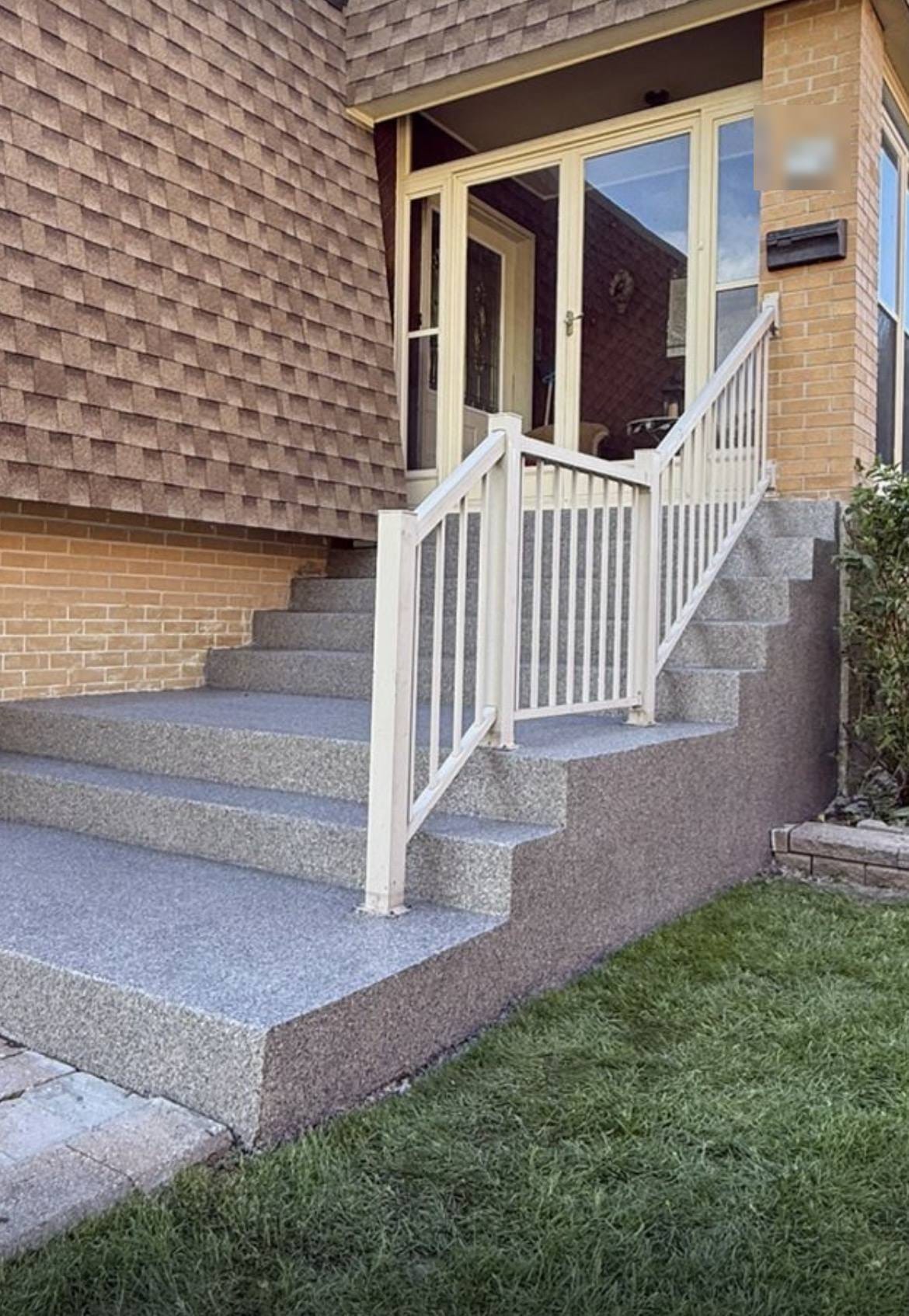 See it doneThe spalled porch above, rebuilt and refinishedView →