
The short answer
Concrete leveling in Toronto is priced per square foot of slab lifted: published Canadian mudjacking rates run $3–$6 per square foot, and polyurethane foam lifting (polyjacking) costs more per square foot but cures in minutes and adds almost no weight. Either route is a fraction of replacement ($12–$20 per square foot new). The number that matters is priced to your slab, in writing, after someone looks at how far it has dropped and why.
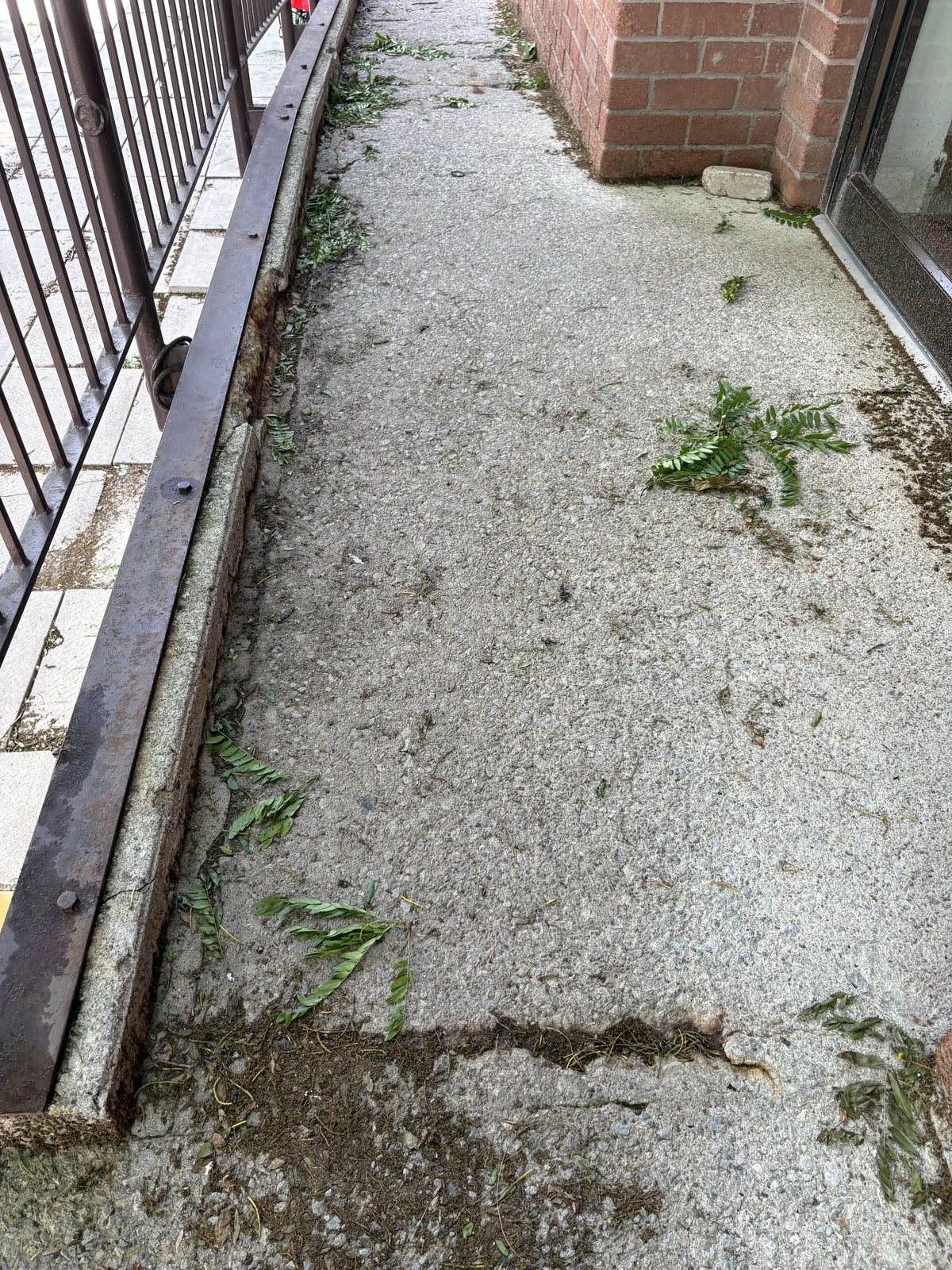
What drives the cost of lifting a slab
Four things set the number: the area of slab being lifted (leveling is priced per square foot), how far it has dropped (more lift means more material pumped underneath), the size of the void under it (a washed-out base swallows material), and access (a back patio behind a fence costs more to reach than a front walk).
That is why a walkway lift and a garage slab lift can be quoted very differently even at similar areas. The honest quote follows a look at the slab, a check of what caused the settlement, and a read on whether the slab is sound enough to lift at all.
Mudjacking: the traditional lift
Mudjacking pumps a cement slurry through small holes drilled in the slab, filling the void and pushing the slab back to grade. Published Canadian rates run $3–$6 per square foot, which makes it the budget-friendly route for larger areas.
Its trade-offs: the drill holes are larger, the slurry adds real weight to soil that already failed once, and cure takes a day or so before the slab returns to full service. On stable soils with straightforward settlement, it remains a perfectly good repair.
Polyjacking: the foam lift
Polyjacking pumps a two-part polyurethane foam that expands under the slab, lifts it precisely, and cures in minutes. The holes are smaller, the material adds almost no weight, and it does not wash out the way soil fines do.
It costs more per square foot than mudjacking, and the premium buys precision and speed: driveways can carry a car again the same day. On soft or moisture-prone soils, the light weight is not a luxury, it is the reason the repair holds.
When lifting is the wrong answer
A slab that is cracked into pieces, scaled past its surface, or sitting on a base that is still actively washing out cannot be usefully lifted, you would be raising rubble onto a failing foundation. The honest routes then are replacing the slab ($12–$20 per square foot new, including removal) or fixing the drainage first and lifting after.
This is also the test to put to any quote: did they explain why the slab settled? Settlement always has a cause, compaction, a downspout, tree roots, and lifting without addressing the cause is a repair on a timer.
How we handle leveling jobs
Slab lifting at Concrete Repair Plus is performed by our vetted levelling partner and coordinated by us, one assessment, one written scope, one point of contact. We diagnose the cause, the lift method is matched to your slab and soil, and where replacement is the honest answer we price that instead and say why.
Either way the number is priced to your slab, itemized in writing, free. If a walkway, driveway or patio at your place has dropped, send a photo and we will tell you which route it is looking like.
Key takeaways
- Leveling is priced per square foot: mudjacking $3–$6 published Canadian rates, polyjacking more but faster and lighter
- Either lift is a fraction of replacement at $12–$20 per square foot new
- Lift amount, void size and access move the number; the cause of settlement decides whether lifting is honest at all
- A quote that does not explain why the slab settled is a repair on a timer
Frequently asked
Is mudjacking cheaper than replacing concrete?
Substantially, when the slab qualifies: published Canadian mudjacking rates run $3–$6 per square foot against $12–$20 per square foot for new concrete including removal. The catch is the word qualifies, broken or scaled slabs cannot be usefully lifted.
How long does concrete leveling last?
When the cause of settlement is addressed, grading, downspouts, compaction, a lift is a long-term repair; polyurethane in particular does not wash out or add load. When the cause is ignored, any lift settles again on the same schedule as the original.
Mudjacking or polyjacking for a driveway?
Driveways favour polyjacking more often: it cures within hours to carry vehicle weight, lifts precisely, and adds almost no load. Mudjacking stays competitive on larger, lighter-duty areas. The written scope names the method and why.
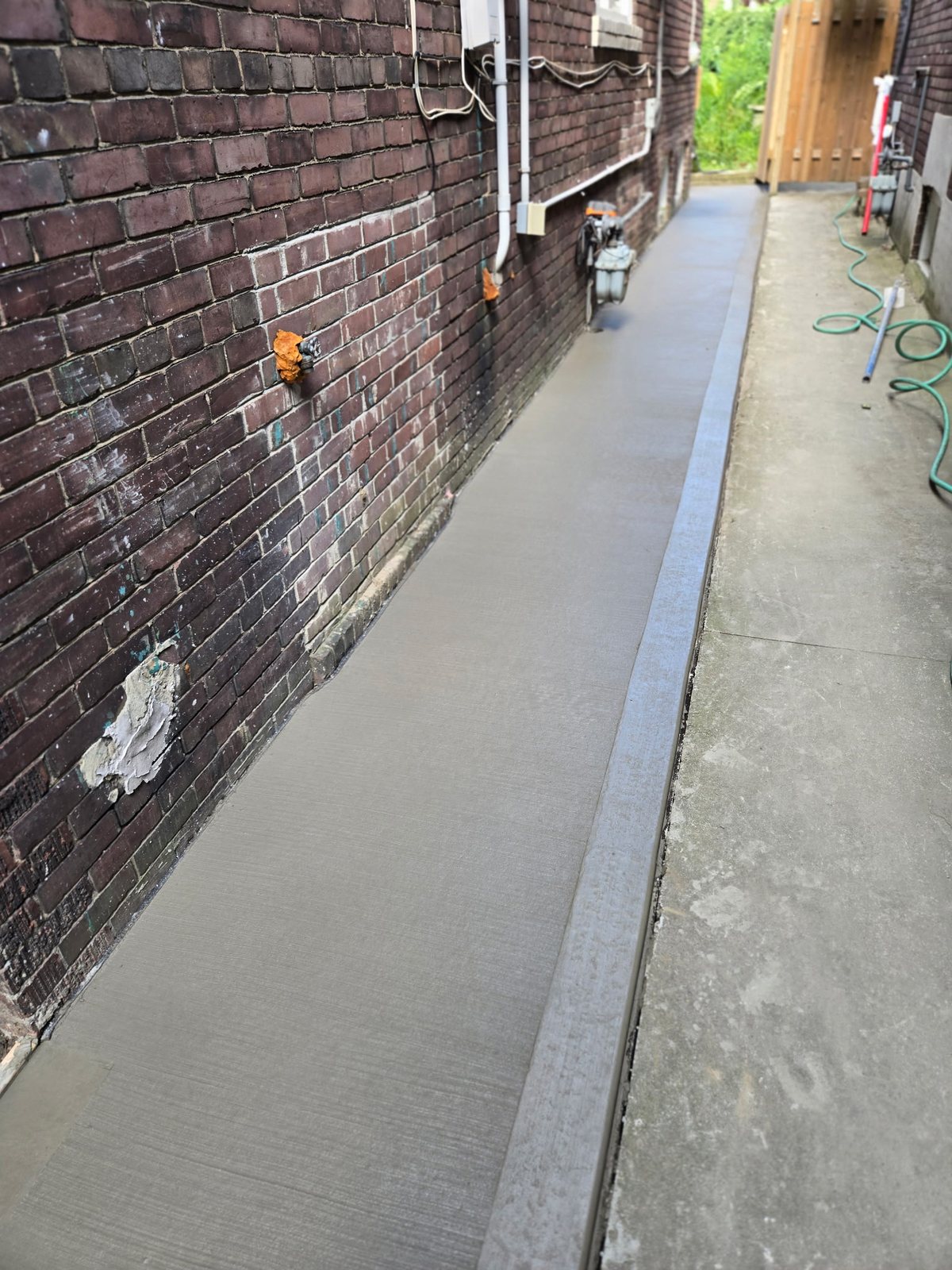 See it doneWhen lifting is not the answer: rebuilt from the baseView →